What you need to know
🇬🇧 The UK has passed 2 million solar installations UK government solar PV deployment data confirmed 2 million cumulative UK installations as of March 2026, with 27,607 new installations recorded that month, the highest monthly total since December 2015 (gov.uk solar PV deployment statistics; Solar Power Portal May 2026; pv-magazine 6 May 2026).
📈 2025 was the strongest year on record Solar Energy UK's 2026 update reports 269,000 UK solar installations completed in 2025, with more than 95% of them on rooftops. That's a step up on previous years and reflects rising homeowner demand rather than a single policy push.
🏠 Rooftop solar dominates the UK installation mix Of the 2025 installations, more than 95% were rooftop systems on residential properties, according to Solar Energy UK. The story isn't industrial solar farms; it's UK homes adding panels.
💷 The underlying economics have shifted, but the basics haven't Falling per-kWp installed costs, more competitive export tariffs, more common battery storage alongside new installations, and 0% VAT through 31 March 2027 have shifted the economics. The basics of whether solar suits a particular home (roof, shading, usage) haven't changed.
🧰 The decision is still property-by-property The momentum story is real, but it doesn't translate into a uniform "yes" or "no" for any single home. Property-specific design (orientation, pitch, shading, usage pattern) is still where the homeowner-side answer comes from.
The UK passed 2 million cumulative solar installations in March 2026, with 27,607 new installations recorded that month, the highest monthly total since December 2015, according to UK government solar PV deployment data and confirmed by Solar Power Portal (May 2026) and pv-magazine (6 May 2026). 2025 was the strongest year on record at 269,000 installations, more than 95% of them on rooftops (Solar Energy UK, 2026).
It's a quiet milestone, with no announcement and no big political moment, but it does change the backdrop for any UK homeowner who has thought about solar before and put the decision aside. Below, we'll look at what's actually changed in the last five years, what hasn't, and what that means if you're still on the fence.
If you'd like to find out how much a solar & battery system could save you on your electricity bills, answer a few questions below and we'll provide an estimate for you.
A quiet milestone
The 2-million figure comes from gov.uk's solar PV deployment statistics, the official UK source for installation data. It's the cumulative count of recorded UK solar installations, dominated by residential rooftop systems but including some commercial and ground-mounted projects.
The March 2026 monthly figure of 27,607 installations is the headline statistic that pushed the cumulative count over 2 million. Both Solar Power Portal (May 2026) and pv-magazine (6 May 2026) covered the milestone, citing the gov.uk dataset.
The story behind the headline isn't a single event. It's a steady accumulation: 269,000 installations in 2025 (Solar Energy UK), strong winter and spring activity into 2026, and an installed base now large enough to matter at the level of the UK grid, which is one reason headlines about negative wholesale electricity prices during the May 2026 heatwave landed the way they did.
What 2025 looked like
Solar Energy UK's 2026 update gives the cleanest picture of the UK installation mix in the most recent full year:
269,000 UK solar installations completed in 2025, the strongest year on record.
More than 95% of those installations were on rooftops.
Both figures are reported by Solar Energy UK, the UK trade body for the solar industry.
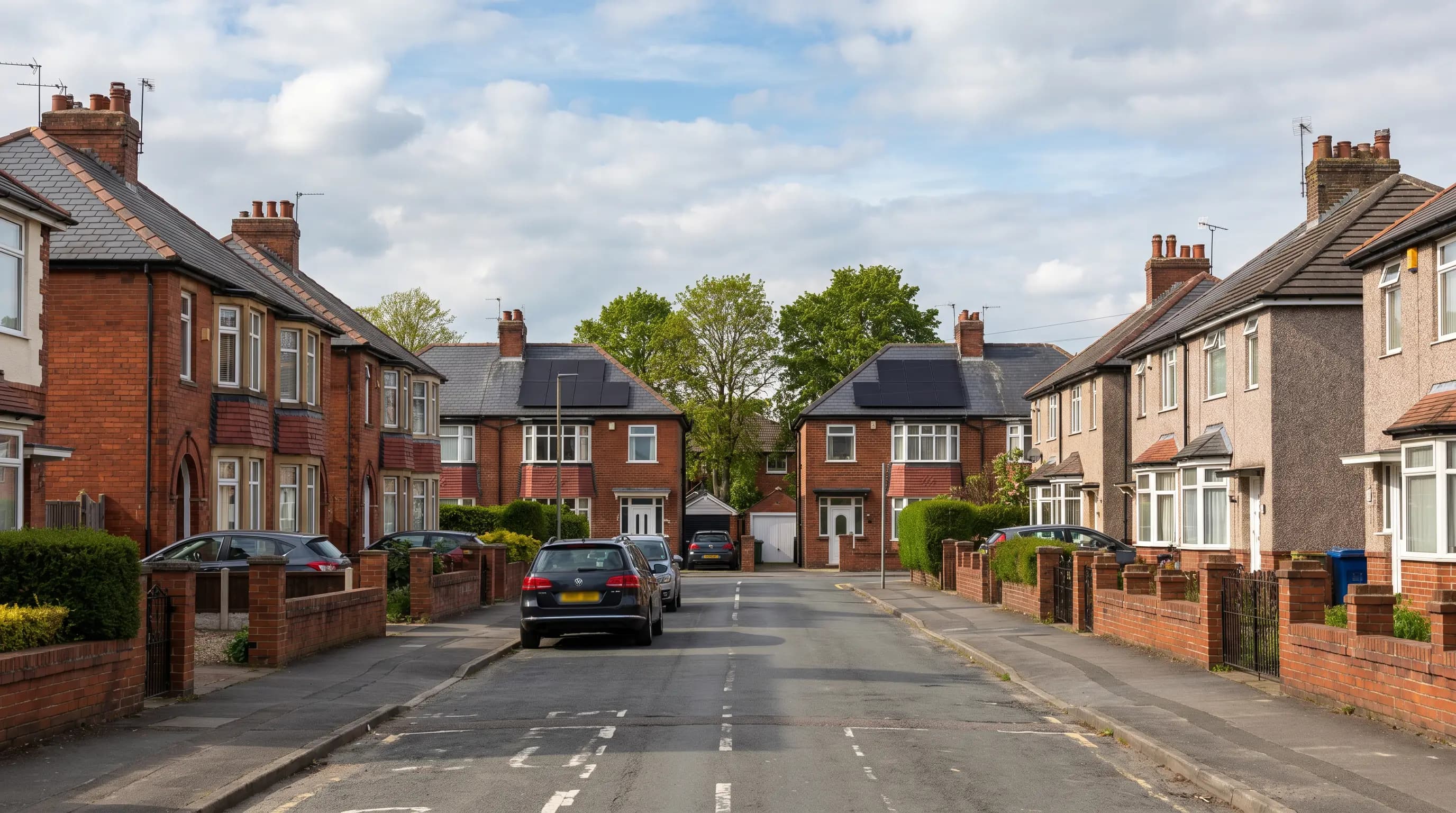
What that means practically is that the typical UK solar installation in 2025 wasn't a solar farm; it was a homeowner adding panels to a roof. The same broad pattern is showing up in the first months of 2026, with the 27,607 March installations sitting near the top of the monthly series.
What's actually changed
The five-year picture has three useful threads.
First, on pricing: falling per-kWp installed costs are documented across multiple UK industry sources, and the practical effect is that an equivalent installation in 2026 costs less than it did in 2021. The exact ranges vary by source, but the direction is consistent.
Second, on batteries: battery storage is now common alongside new solar installations. Industry sources describe it as the fastest-growing segment of the UK domestic solar market, and 0% VAT applies to qualifying residential solar and battery work until 31 March 2027 (GreatBritishEnergy 2026; iHeat 2026).
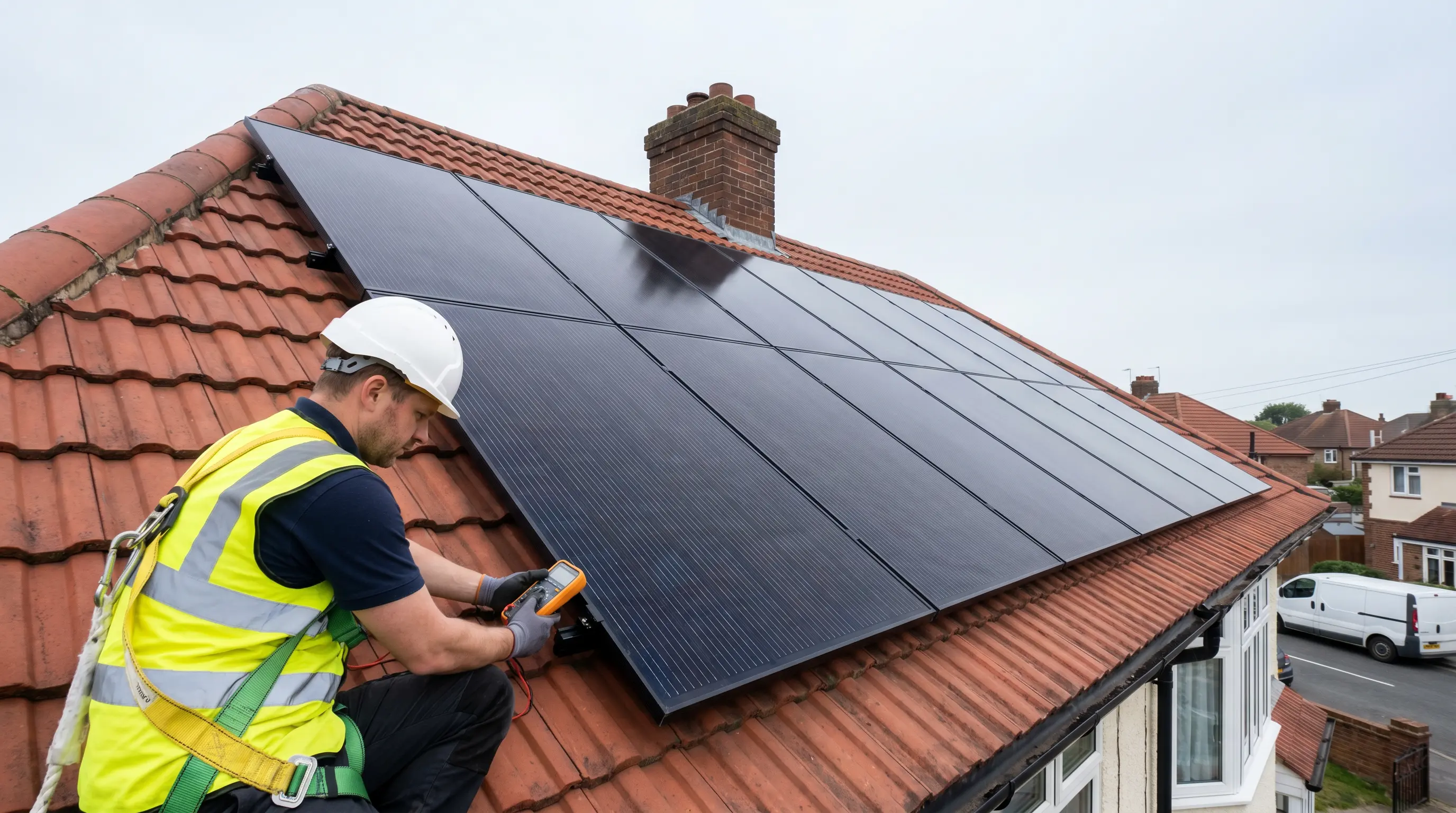
Third, on the rooftop tilt: with more than 95% of 2025 installations on rooftops (Solar Energy UK 2026), the residential rooftop market is where the headline numbers actually sit. The growth story isn't industrial solar farms; it's UK homes.
What hasn't changed
The basics of whether solar suits a particular home are the same as they were in 2021. Three matter most.
Roof. Orientation (the closer to south, the better, although east–west systems can still work well), pitch (a typical UK roof pitch is reasonable for solar), and shading (significant shading from chimneys, trees or neighbouring buildings reduces output).
Usage. A home that uses most of its electricity during the day, or that's willing to shift usage to the day or to add a battery, gets more value out of solar than a home where most usage is at night. Self-consumption matters because every kWh used at home displaces a kWh that would otherwise have been imported at retail price.
Property-specific design. Even with falling prices and more battery options, the actual sizing of a system (number of panels, inverter capacity, battery sizing) is a property-specific calculation that depends on roof area, household usage, and budget. That's why no published "average" applies cleanly to a single home.
The momentum story can be useful or it can be misleading. It's useful if it signals to a homeowner that 2 million other UK households have already made the decision. It's misleading if it implies the answer is "yes" without a property-specific look.
Summary
The UK quietly passed 2 million solar installations in March 2026, and 2025 was the strongest year on record. The economics have shifted: installation costs are lower, batteries are more common, and 0% VAT runs until 31 March 2027. The homeowner-side basics, though, haven't moved. It's still a property-specific decision based on roof, usage, and design.
If you'd like to find out how much a solar & battery system could save you on your electricity bills, answer a few questions below and we'll provide an estimate for you.
UK solar in 2026: FAQs
How many UK homes have solar panels?
UK government solar PV deployment data shows 2 million cumulative UK installations as of March 2026, the majority of them residential rooftop systems (gov.uk solar PV deployment statistics; Solar Power Portal May 2026; pv-magazine 6 May 2026).
How many UK homes installed solar in 2025?
Solar Energy UK reports 269,000 UK solar installations completed in 2025, the strongest year on record, with more than 95% of those installations on rooftops.
Are most UK solar installations on rooftops or on the ground?
The vast majority are rooftop. More than 95% of 2025 UK solar installations were on rooftops, according to Solar Energy UK (2026). That's why the milestone story is really a residential-rooftop story.
Is solar worth it for the typical UK home in 2026?
Whether solar is worth it for any one home depends on the property: roof orientation and shading, usage pattern, and whether a battery makes sense alongside the panels. The general direction has shifted in solar's favour since 2021 (lower system prices, more battery options, 0% VAT to 31 March 2027), but the homeowner-side answer is still property-specific.
What's the most popular size of UK solar system?
A mid-sized rooftop system (typically 4–5 kWp) is a common choice for a three-bedroom UK home; larger homes go up from there. Actual sizing depends on roof area, usage, and budget, so any "typical" figure is a starting point rather than a recommendation.
Sources
gov.uk solar PV deployment statistics.
Solar Power Portal: "UK surpassed two million solar installations in March", May 2026.
pv-magazine: "There are now more than 2 million UK solar installations", 6 May 2026.
Solar Energy UK news, 2026.
GreatBritishEnergy: 2026 grants guide.
iHeat: 2026 battery storage guide.